
Somalia remains in dire situation of food insecurity, an estimated 3.5 million people in different parts of the country are facing high and acute food insecurity, over 1 million children under five years are likely to be accurately malnourished.
Armed conflicts continue in large parts of the country, severe climate shocks, disease outbreaks, weak infrastructure and social protection systems prevail and aggravate preexisting vulnerabilities
In Somalia, Livestock sector is pivotal in the country’s economy and food security, the sector is however being severely threatened by climate change impacts, constrained by limited access to water, pasture and to veterinary services, high feeding cost and limited market access is also challenging the sector where pastoralist community keep losing their animals
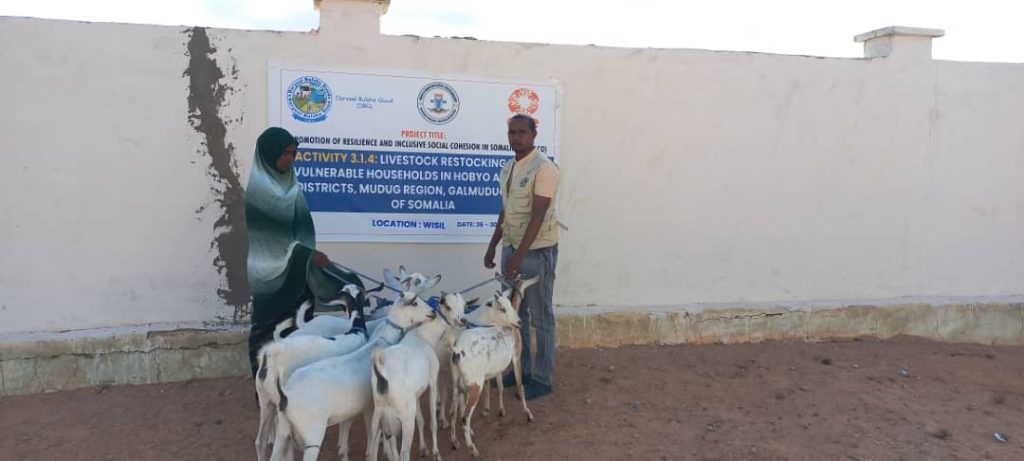
DBG in collaboration with the local authorities and Galmudug ministry of Livestock has been supporting the local pastoralist families in Hobyo district of Mudug region in central Somalia.
Those families had an average 400 goat and sheep pcs per family, they would sell some for about $60 each, use their livestock’s milk and meat to feed the families nevertheless, the animals began to perish day by day in unforgiving landscape of sand, stones and dehydrated bushes due to recurring drought and environmental degradation, as a result, animal herders were forced to become internally displaced people (IDPs) as they have lost their livelihoods.
1,000 female goats were distributed by DBG to an identified 100 households in Hobyo district, each HH received 10 female goats pre-vaccinated by the Community Animal Health Workers (CAHWs) from Galmudug Ministry of Livestock (MoL) who were trained by DBG
The supported families would restore the lost animals through their flocks or herds productions, an economic engine for the local people where pastoralists with a good amount of herds would sell livestock to urban livestock traders, receiving a cash to feed their families and improve copy mechanism.